
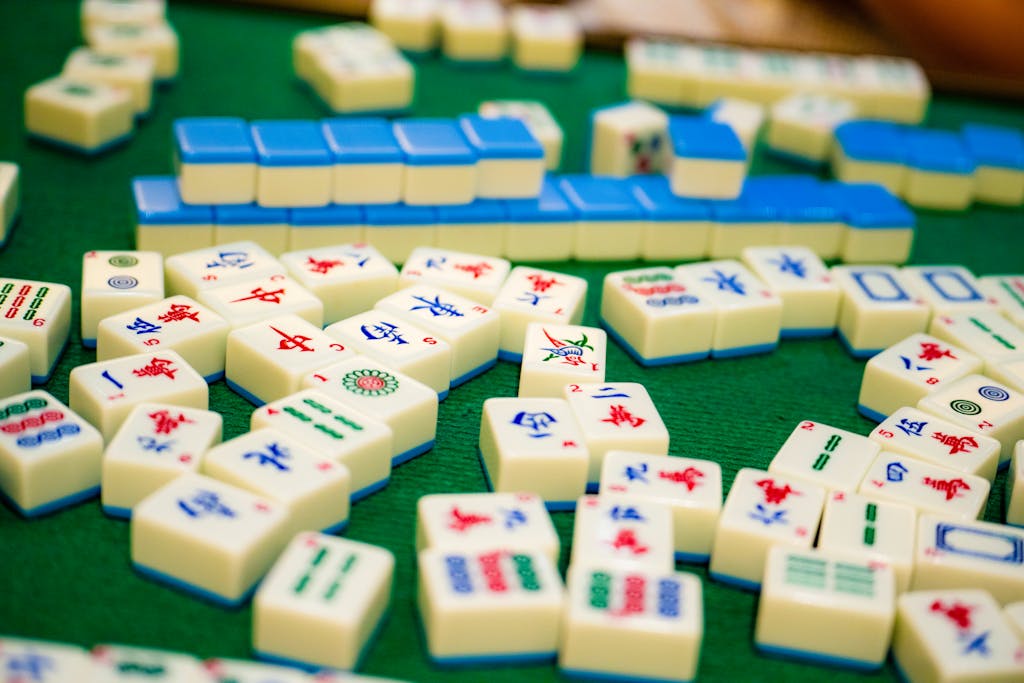
Everything You Need to Know About Mah Jongg, Including Where to Play
Mah Jongg is quickly growing in popularity with people of all ages, thanks to its mix of strategy, social connection, and fun. If you’ve been curious about the game or want to learn how to play, here’s a beginner-friendly look at the basics of Mah Jongg, plus where to find lessons and drop-in games throughout Douglas County, including Castle Rock, Highlands Ranch, Lone Tree, and Parker.
Already know the basics of the game? Jump to find lessons and games in Douglas County.
What is Mah Jongg?
Mah Jongg (also spelled Mahjong) is a tile-based game that originated in China and is now played around the world in many different styles. The American version, which is especially popular in the U.S., is usually spelled “Mah Jongg” and is played with a yearly card from the National Mah Jongg League.
The game combines skill, strategy, memory, and a little luck. It’s often compared to a mix of rummy and card games, but played with tiles instead of cards.
The Goal of the Game
The goal is to build a winning hand of 14 tiles by creating specific combinations listed on the annual Mah Jongg card.
Players draw and discard tiles while trying to complete a matching hand before anyone else at the table.
The Tiles
A standard American Mah Jongg set includes:
Suits
- Dots (Circles)
- Bams (Bamboo)
- Craks (Characters)
Each suit is numbered 1–9.
Honor Tiles
- Winds: North, East, South, West
- Dragons: Red, Green, White
Bonus Tiles
- Flowers
- Jokers (used only in American Mah Jongg)
Common Terms
- Pung: 3 matching tiles
- Kong: 4 matching tiles
- Pair: 2 matching tiles
- Chow: A sequence of 3 consecutive numbers in the same suit (used in some versions, but not American Mah Jongg)
- Joker: Wild tile used in sets of 3 or more
How a Turn Works
- A player draws a tile.
- The player discards one tile.
- Other players may call certain discarded tiles to complete sets.
- Play continues until someone completes a valid hand and calls “Mah Jongg!”
The Mah Jongg Card
In American Mah Jongg, players use a yearly hand card published by the National Mah Jongg League. The card shows all the official hands allowed for that year.
Hands are grouped into categories such as:
- Year hands
- Consecutive runs
- Quints
- Singles and pairs
Learning to read the card is one of the biggest parts of learning the game.
Where to Find Mah Jongg Lessons and Games in Douglas County
Mahjong Standard offers private lessons and open play sessions in Highlands Ranch, Castle Pines, Parker, and Lone Tree. You can also arrange a hosted game. Visit their site to learn more.
Evergreen Mahjong Collective offers social play, lessons, and private events throughout South Denver, including Highlands Ranch and Parker. Visit their site to see their schedule and upcoming events.
Highlands Ranch Community Association offers drop in Mah Jongg (American) for $5 per session and classes for a fee. See classes here.
Highlands Ranch Senior Center offers free classes. If you are not a member, you can pay a drop in fee of $2.50 for residents and $3 for non-residents. Register on their activity page (search for “mahjong”).
The Lone Tree Hub has drop in Mah Jongg (American) on Wednesdays from 11:30 a.m. to 3 p.m. and Thursdays from 12:30 to 3:30 p.m. There is a drop in fee of $2 for residents and $3 for non-residents. Registration is not required. Lessons are offered for a fee. View the schedule.
The Parker Senior Center has drop in mahjong on Thursdays from 12:30 to 3:45 p.m. You must be a member. They also offer a variety of other screen-free games like bunco, bridge, and canasta. View the schedule.
Follow Castle Rock Mahjong on Facebook to find local lessons and games in the Castle Rock area.
Castle Rock Senior Center has game tables open and available most Mondays and Fridays (occasionally on Wednesdays) at 1:00 p.m. to play whatever any group wants to play, including Mah Jongg. You must be a member. View the schedule in the monthly newsletter.
Sterling Ranch has drop in Mah Jongg for residents on most Thursdays from 2 to 4 p.m. at the Great Hall. View the calendar.



We also teach mahjong lessons and host mahjong parties! If you’re looking for a fun way to learn the game, check out our site!